





Thermal Management Testing for Electric Vehicles
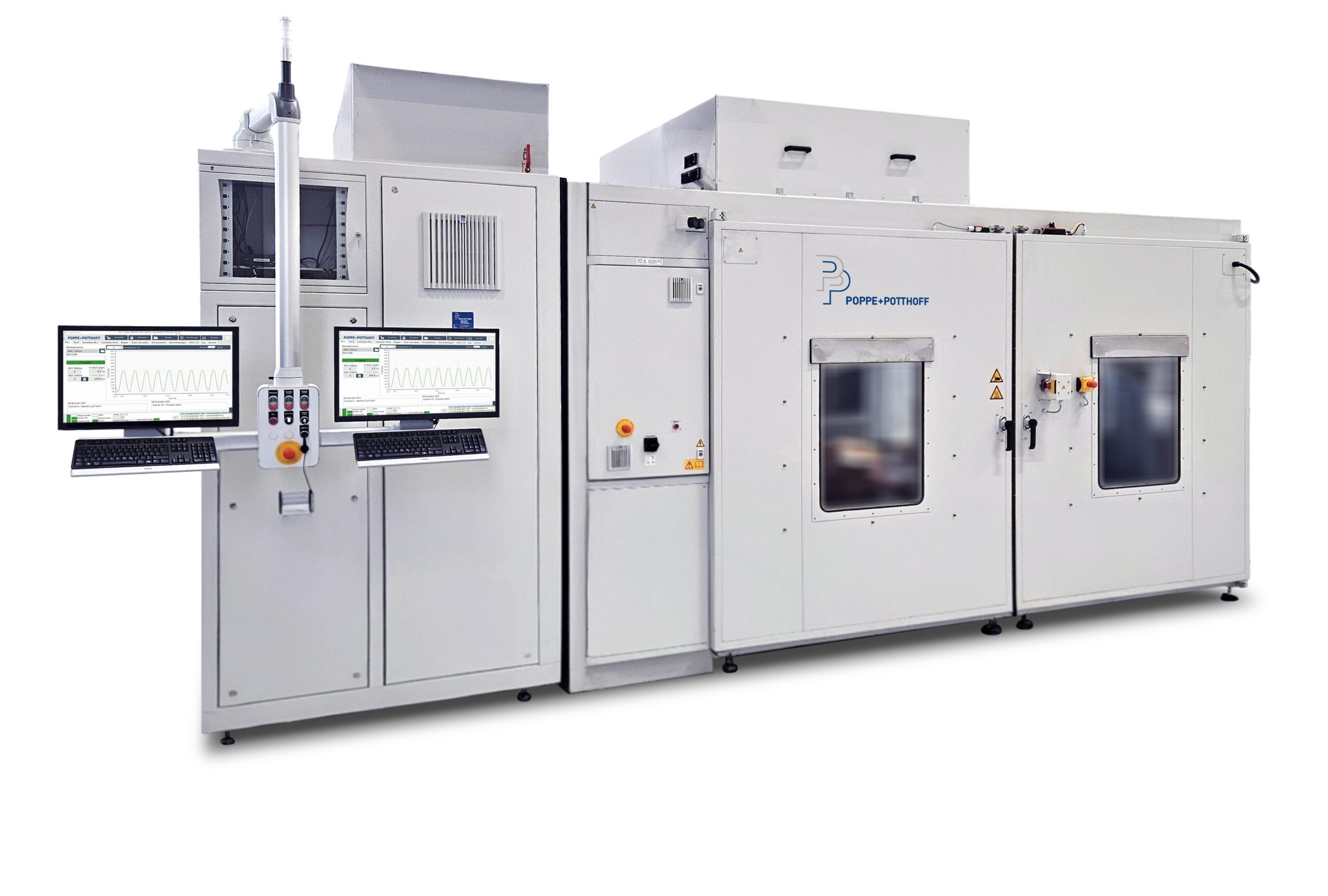
Pressure and Temperature Cycling: The Standard for EV Thermal Management Validation
This article was originally published in SENSOR+TEST – Das Innovationsmagazin, May 2026. Read the full article here: SENSOR+TESTMay 2026, p. 106
Electric vehicles place extreme demands on their thermal management systems. Battery packs, power electronics, heat pumps, and electric drives all operate within narrow temperature windows. Maintaining those windows across thousands of operating hours is a serious engineering challenge. Unlike combustion engines, battery-electric vehicles have no continuous waste-heat source. Therefore, heating and cooling must be actively and efficiently managed at all times.
Even minor deviations from defined temperature ranges can reduce driving range, accelerate component aging, and compromise safety. That makes validating thermal management systems one of the most critical steps in EV development.
Why Thermal Management Systems Are So Complex in EVs
Modern electric vehicles don’t use a single cooling loop — they use several decoupled circuits operating at different temperature levels. The battery circuit typically runs between -40°C and +60°C. Meanwhile, high-performance electronics or heat pump systems can reach up to +140°C. Each circuit must be designed, tested, and validated independently. Additionally, their interaction with the others also needs to be validated.
Components such as hoses, pipes, cooling plates, heat exchangers, pump housings, valves, and connectors are subjected to repeated cyclic pressure and temperature loads during normal vehicle operation. Rapid charging cycles, recuperation phases, and ambient temperature fluctuations cause recurring changes in pressure, temperature, and volume flow throughout the system. Over time, this mechanical-thermal fatigue can lead to material failure — particularly at transition zones between different materials. It can also happen at joints and welds where differing thermal expansion coefficients create local stress concentrations.
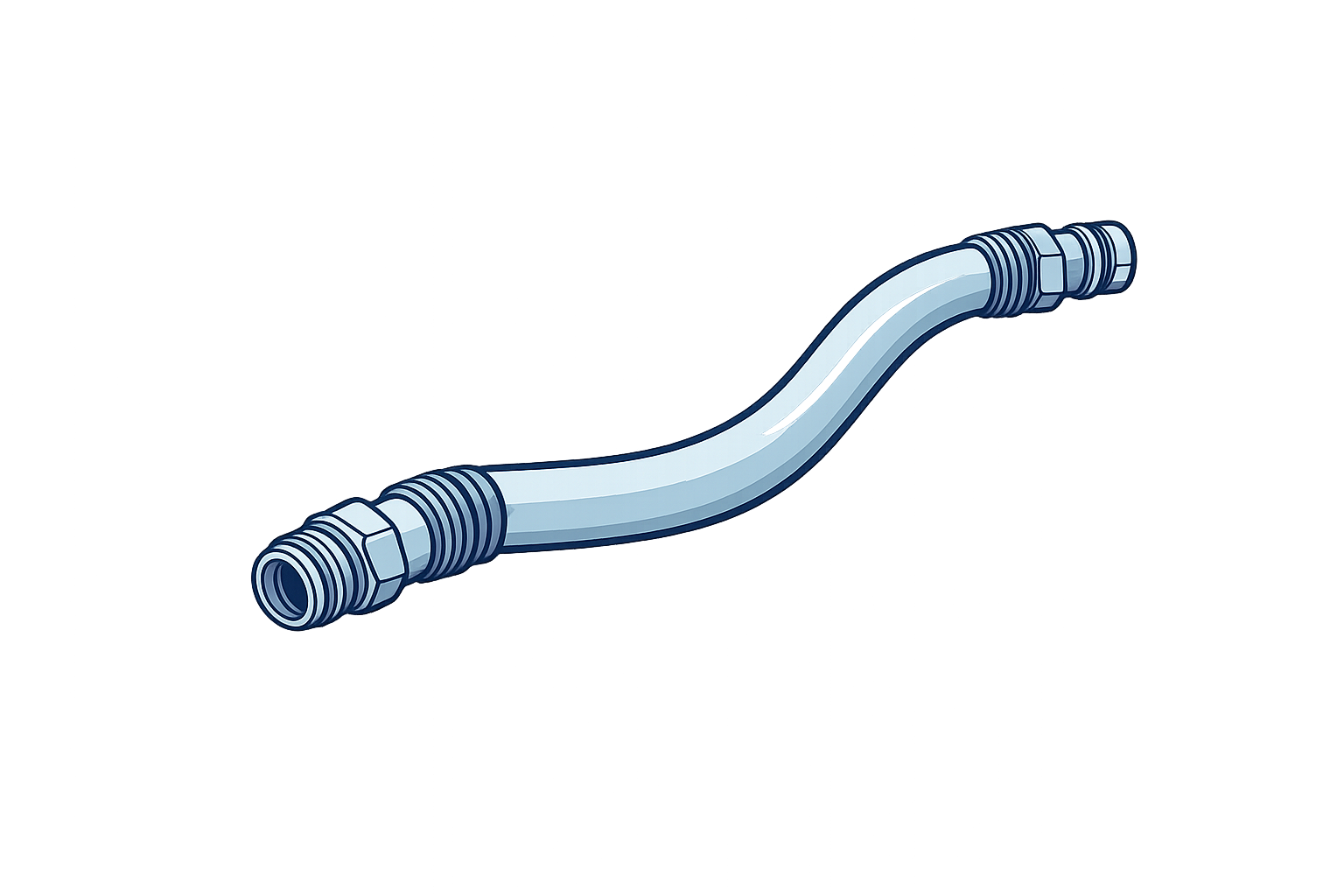
Tubes & Hoses
Hoses for thermal and fluid systems must withstand repeated pressure pulsation cycles and burst pressure loads to ensure long-term durability and leak-free operation under dynamic operating conditions.
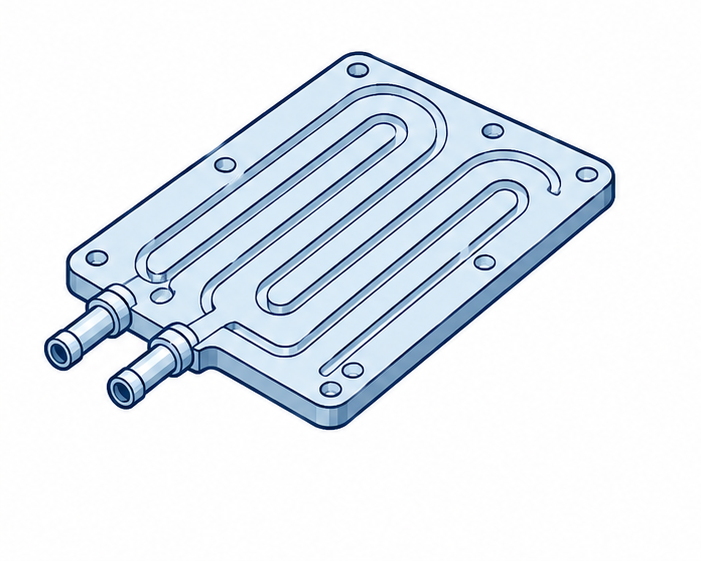
Battery Cold Plate
Battery cold plates require precise burst and pressure pulsation testing to verify leak tightness and fatigue durability within high-performance EV cooling circuits.
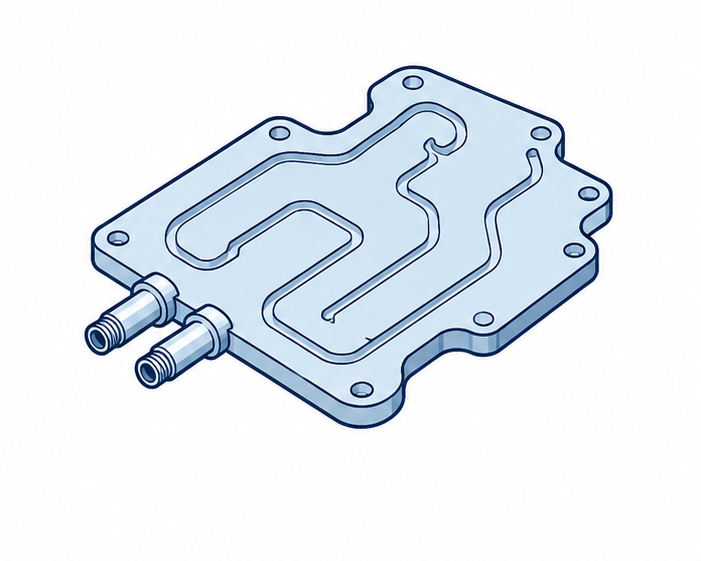
ADAS Cold Plate
ADAS & ECU cold plates are validated through cyclic pressure and burst testing to ensure reliable cooling performance and structural stability for sensitive electronic and sensor systems.
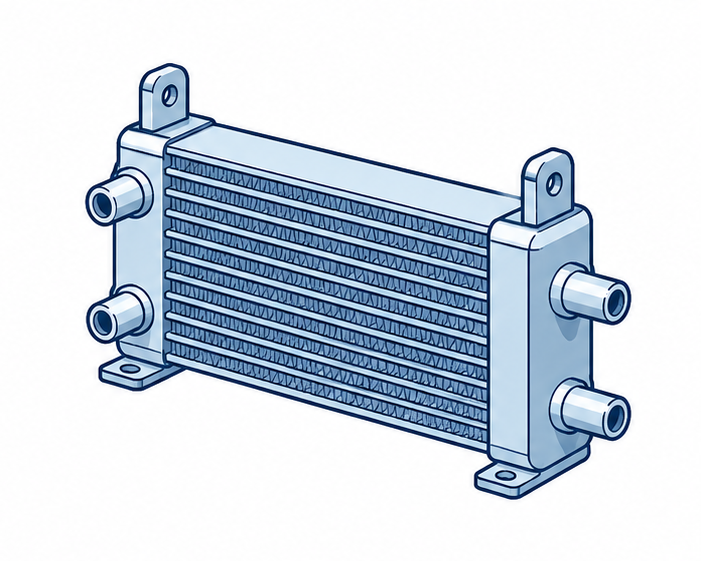
Heat Exchanger
Heat exchangers are pressure tested through burst and pulsation testing to validate structural integrity, fatigue resistance, and sealing performance under thermal and hydraulic stress.
Cyclic Testing: The Industry Standard for Thermal Validation
To address this, combined pressure and temperature cycling tests (access our whitepaper) have become the established validation standard for thermal components in the automotive industry. Unlike static burst pressure tests — which measure maximum single-load capacity — cyclic endurance tests focus on the reproducible simulation of realistic pressure profiles over a defined service life.
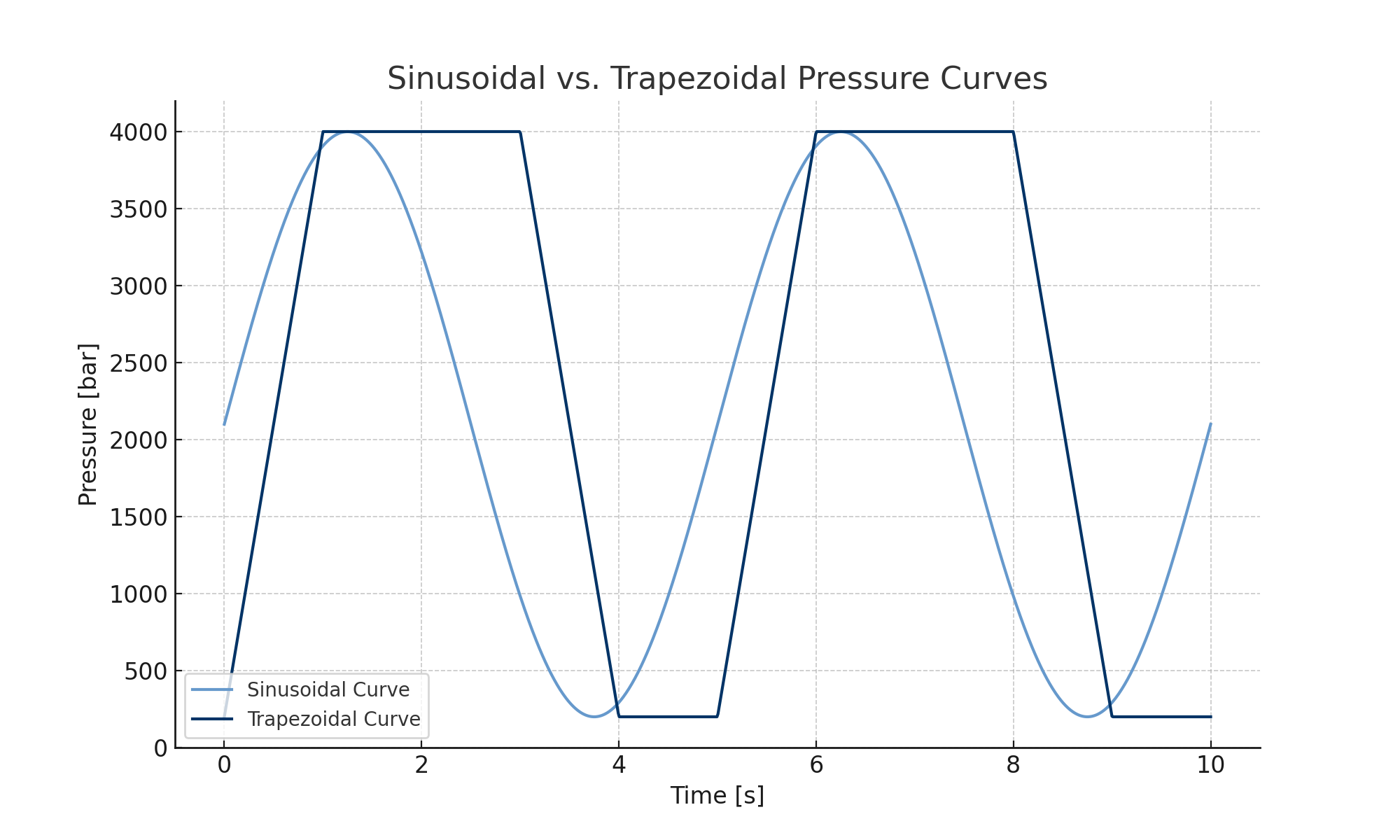
Our test systems use water-glycol mixtures as the test medium, covering a temperature range from -40°C to +140°C. This allows both cold-start conditions and high-load thermal scenarios to be accurately replicated. Pressure profiles can be programmed as sinusoidal or trapezoidal curves and tailored to specific load collectives. Depending on the application, test frequencies range from 0.2 to 2 Hz. Moreover, flow rates of up to 60 l/min per DUT can be reached.
By compressing real-world pressure and temperature load collectives, our test systems can simulate several years of vehicle operation in a significantly reduced timeframe. This provides a reliable, accelerated basis for lifetime assessment and component release decisions.
Modular Test Systems for Multi-Circuit EV Architectures
The test systems developed and manufactured by Poppe + Potthoff Maschinenbau in Nordhausen, Thuringia, are modularly designed to reflect the complexity of modern EV thermal architectures. Multiple independent fluid circuits can be operated in parallel, each at different temperature levels. In this way, the full thermal landscape of a vehicle architecture can be simultaneously represented.
Volumetric flow and flow dynamics are precisely regulated and monitored. As a result, both development efficiency and the comparability of results across platforms and suppliers are increased.
Data-Driven Lifetime Assessment
A reliable lifetime prediction requires the continuous recording of all relevant measured variables. Pressure curves are recorded with high temporal resolution to correctly capture dynamic load peaks. Temperature measurements at the inlet, outlet, and at local points on the test object enable thermal gradient analysis and the identification of potential hotspots. Additionally, volumetric flow, differential pressure, and, where applicable, electrical parameters of active components are captured.
Changes in system behavior over time provide early indications of degradation processes. Rising pressure losses can indicate cross-sectional narrowing or particle formation, while changes in temperature distributions suggest deteriorating heat transfer. This systematic data capture forms the basis for robust lifetime models. It also supports design optimizations and the assessment of safety reserves — taking validation well beyond simple functional testing.
Conclusion: The Key to Robust EV System Design
As electrification advances, the focus of development shifts from individual components to complex thermal subsystems. Managing cyclic pressure and temperature loads is becoming a decisive factor for the durability, efficiency, and safety of electric vehicle architectures.
Modular, scalable test systems with high-dynamic control and precise measurement technology provide the technological foundation for this. They enable realistic, accelerated simulation of vehicle operation and deliver the data needed to design robust thermal systems and sustainably validate electric vehicle architectures.
This article was originally published in SENSOR+TEST – Das Innovationsmagazin, May 2026. Read the full article here: SENSOR+TEST May 2026, p. 106
FAQ
Q: Why do EV thermal management systems require such extensive testing?
A: Electric vehicles operate multiple decoupled cooling and heating circuits at different temperature levels simultaneously. Therefore, components within these circuits are constantly exposed to changing pressures, temperatures, and flow rates — especially during fast charging, recuperation, and cold starts. Over thousands of operating cycles, this mechanical-thermal stress can cause fatigue at welds, joints, and material transitions. Thorough cyclic testing ensures these failure modes are identified and addressed before the vehicle reaches the market.
Q: How long does a cyclic thermal endurance test take?
A: By compressing real-world load collectives into accelerated test profiles, modern test systems can simulate several years of vehicle operation in a significantly shorter timeframe. The exact duration depends on the required number of load cycles, the test frequency (typically between 0.2 and 2 Hz), and the specific OEM or normative requirements the test aligns with. The goal is always to generate statistically reliable lifetime data as efficiently as possible.